




Forensic & Criminological Matrix
| Parameter | Forensic Detail |
|---|---|
| Forensic Heading / Aliases | N/A |
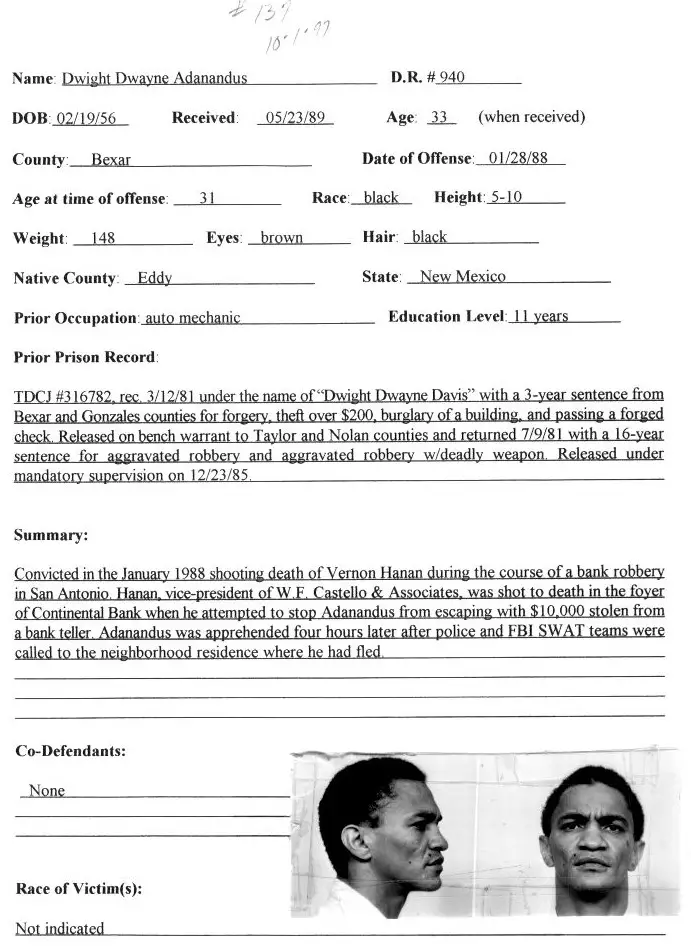
| Legal Identity | Dwight Dwayne Adanandus |
| Confirmed Victims | 1 (Vernon Hanan) |
| Active Timeline | January 28, 1988 |
| Jurisdiction / Area of Operations | San Antonio, Texas, USA |
| Criminological Classification | Armed Robber / Felony Murderer |
| Forensic Modus Operandi | Bank robbery via demand note and firearm; close-range shooting during escape |
| Weapon / Mechanism of Death | .22-caliber pistol |
| Motive / Behavioral Dynamics | Monetary gain / Escape-oriented violence |
| Judicial Outcome | Executed by lethal injection (October 1, 1997) |
1. Background and Profile
Dwight Dwayne Adanandus was a 21-year-old male at the time of his crime in 1988. His behavioral profile aligned with opportunistic violent crime rather than premeditated homicide. However, his willingness to carry and discharge a firearm during a felony indicated a high level of criminal volatility and disregard for human life.
2. Crime Spree
On January 28, 1988, Adanandus entered the Continental National Bank in San Antonio. He was armed with a .22-caliber handgun and presented a demand note to the teller. As he attempted to exit the premises with the stolen funds, a teller's distress cry alerted Vernon Hanan, a customer entering the bank. Hanan attempted to subdue the fleeing suspect. In the ensuing struggle, Adanandus shot Hanan, causing fatal injuries. The perpetrator fled the scene on foot.
3. Investigation and Arrest
A massive manhunt involving the San Antonio Police Department and the FBI was launched immediately. Following witness leads, authorities tracked Adanandus to a residential area near the bank. He was discovered four hours later hiding in the crawlspace beneath a house. He surrendered to officers without further incident. Forensic evidence, including the recovery of the weapon and eyewitness identification, solidified the case against him.
4. Legal Proceedings and Outcome
Adanandus was charged with capital murder under Texas law, which allows for the death penalty when a murder is committed during the commission of another felony (robbery). On May 23, 1989, he was sentenced to death. His defense team filed numerous appeals, citing 46 points of error, including claims that the shooting was not intentional but a reaction to the victim's intervention. The appeals were systematically denied. On October 1, 1997, Adanandus was executed by lethal injection. He expressed remorse in his final statement to the victim's family.