Forensic & Criminological Matrix
| Parameter | Forensic Detail |
|---|---|
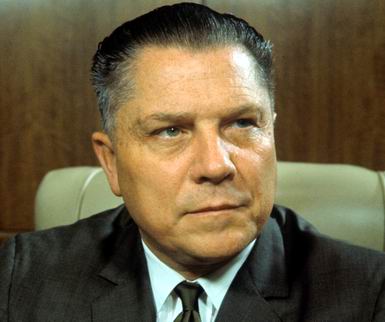
| Forensic Heading / Aliases | The Disappearance of Jimmy Hoffa |
| Legal Identity | James Riddle Hoffa |
| Confirmed Victims | 0 |
| Attributed / Indicted Victims | 1 (James Riddle Hoffa) |
| Active Timeline | 1975 |
| Jurisdiction / Area of Operations | Bloomfield Township, Michigan |
| Criminological Classification | Forced disappearance / Unsolved homicide |
| Forensic Modus Operandi | Abduction and disposal of remains in an organized crime context |
| Weapon / Mechanism of Death | Unknown (Hypotheses: incineration, dissolution, or burial) |
| Motive / Behavioral Dynamics | Control of union funds and elimination of political threat |
| Judicial Outcome | Unsolved / Legally declared dead in 1982 |
1. Background and Profile
James Riddle Hoffa was born on February 14, 1913. He rose to prominence as the president of the International Brotherhood of Teamsters. His career was defined by his ability to leverage labor strikes and his controversial ties to organized crime figures, which drew the scrutiny of Robert Kennedy and federal authorities.
2. Crime Spree
On July 30, 1975, Hoffa vanished from the parking lot of the Machus Red Fox restaurant. He was scheduled to meet with mob figures Anthony Provenzano and Anthony Giacalone. His disappearance is widely attributed to the Mafia's desire to prevent his return to union leadership.
3. Investigation and Forensic Hunt
Decades of FBI investigations, including excavations in Michigan, New Jersey, and various water bodies, have failed to locate his remains. The case remains a focal point for forensic speculation and conspiracy theories.
4. Legal Proceedings and Outcome
No criminal charges were ever filed regarding his death. He was declared legally dead in 1982, seven years after he was last seen.
5. Psychiatric Assessment and Conclusion
While no psychiatric evaluation of the perpetrators exists due to the lack of suspects, the case stands as a landmark in American criminology, representing the intersection of labor politics and the Mafia's influence in the mid-20th century.