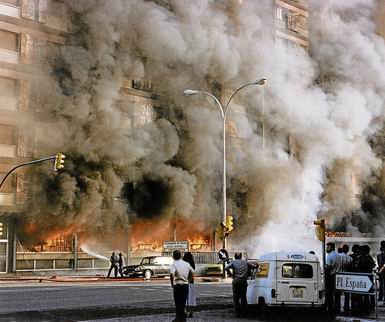
Forensic & Criminological Matrix
| Parameter | Forensic Detail |
|---|---|
| Forensic Heading / Aliases | The Corona de Aragón Hotel Fire |
| Legal Identity | Arson attack (Unsolved) |
| Confirmed Victims | 0 (No judicial conviction) |
| Attributed / Indicted Victims | 78-80 fatalities |
| Active Timeline | July 12, 1979 |
| Jurisdiction / Area of Operations | Zaragoza, Spain |
| Criminological Classification | Terrorist attack / Arson |
| Forensic Modus Operandi | Three simultaneous ignition points using accelerants |
| Weapon / Mechanism of Death | Pyrogel, Napalm, and ammonium nitrate |
| Motive / Behavioral Dynamics | Political destabilization |
| Judicial Outcome | Unsolved / No perpetrator identified |
1. Background and Profile
On July 12, 1979, the Corona de Aragón Hotel in Zaragoza became the site of a major tragedy. The hotel was hosting high-ranking military officials and members of the Franco family, creating a high-security environment that made the subsequent fire even more suspicious.
2. Crime Spree
The fire began at 8:20 AM and spread with extreme velocity, reaching the sixth floor within six minutes. Forensic analysis later identified three distinct ignition points, suggesting a coordinated attack using chemical accelerants like napalm, which produced temperatures exceeding 1,200 degrees Celsius.
3. Investigation and Forensic Hunt
Initial official reports by the Civil Governor dismissed the possibility of terrorism, despite claims of responsibility from groups like ETA. The investigation was marked by significant controversy, with allegations of evidence suppression and a lack of thorough forensic inquiry into the origins of the fire.
4. Legal Proceedings and Outcome
The criminal case was closed in 1981 due to a lack of evidence. However, subsequent civil rulings and a 2009 Supreme Court decision acknowledged the intentional nature of the fire, granting victim status to those affected. The case was reopened by the National Court in 2013, yet the perpetrators remain unidentified.