



I. The Facts and The Crime
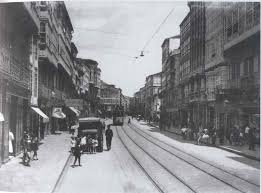
A Coruña at the end of the 19th century was a city in full ferment. The return of the 'indianos' and the flow of American capital had transformed the urban landscape, creating a social fabric where opulence coexisted with precariousness. In this setting, San Andrés Street, a vital artery of local commerce, housed modest businesses and discreet lives. Among them, the couple formed by Gregorio Rey and Melchora Casal García stood out for an apparent normality that hid a parallel financial activity: lending money to neighbors and acquaintances.
The dawn of October 13, 1899, broke the city's routine. The night watchman, Mr. Oca, on his usual rounds, noticed an anomaly at number 152. The lack of response to his calls, unusual for such a methodical couple, raised alarms. Upon entering, the scene that unfolded before his eyes was worthy of a Greek tragedy. Melchora Casal lay lifeless next to the sink, with clear signs of a violent death by strangulation. In the adjoining room, Gregorio Rey presented a fatal stab wound, surrounded by a pool of blood that spread across the wooden floor. There were no signs of a massive robbery, although the nature of their business suggested that the motive could be linked to outstanding debts or an extortion that went wrong.
II. The Investigation and The Police Hunt
The initial investigation was an exercise in forensic improvisation. Without protocols for preserving the crime scene, the police of the time relied on neighborhood testimonies and the reconstruction of the victims' last hours. Two girls, aged eight and nine, became key witnesses by claiming to have seen a 'sinister-looking' couple lurking around the house the previous evening. This description, vague but forceful, directed the focus toward Agustín Seijas, a man with a history of conflict and owner of private schools in Arteixo.
The police hunt was relentless. Seijas and his lover, Ramona Bartomé, were arrested under suffocating media pressure. The press of the time, hungry for culprits, began to build a narrative of guilt even before the investigating judge analyzed the evidence. The testimony of Manuel Losada, a clerk at a warehouse where Gregorio worked, placed Seijas at the scene, while other witnesses, such as the cigar makers Rita and Pilar Tenreiro, claimed to have seen the couple near A Ponte Pasaxe. The discovery of gold earrings at the establishment of José Mejuto, which Seijas used to frequent, was presented as the definitive proof, although their origin could never be reliably linked to the murdered couple.
III. The Judicial Process and The Trial
The trial was a battlefield of contradictions. Seijas's defense was based on absolute denial and the lack of direct material evidence linking him to the murder weapon or the strangulation of Melchora. As the process progressed, the witnesses' statements began to crumble under the defense's scrutiny, revealing temporal inconsistencies and possible personal biases. The Provincial Court of A Coruña, given the fragility of the case, was forced to release the accused on April 13, 1901.
However, judicial freedom did not bring peace. The social stigma became a life sentence. Seijas, despite having been legally exonerated, was the subject of constant public lynching. Every step he took through the streets of A Coruña was a reminder of his alleged guilt. The pressure came not only from neighbors but also from local authorities, who pointed to him as responsible for any minor crime that occurred in the area, turning his life into a hell of surveillance and harassment.
IV. The Verdict, Consequences, and Criminological Legacy
The outcome of this story is a tragedy of isolation and despair. Agustín Seijas, cornered by a society that refused to accept the lack of evidence, decided to end his life on July 7, 1901, by throwing himself into the sea from A Pena de Cruz. His death was not just an act of despair, but a final attempt to claim his innocence. In a letter sent to the director of 'La Voz de Galicia', Seijas wrote: 'I was never a criminal, for which reason I do not fear Almighty God.'
The San Andrés Street case remains an unsolved enigma, a reminder of the dangers of trial by media and the fragility of criminal investigations at the turn of the century. The impunity of the original crime, added to the death of its main suspect, left a scar on the collective memory of A Coruña. This event forced, over the decades, a reflection on the need for more rigorous forensic evidence and on the devastating impact that public suspicion can have on an individual, regardless of their legal guilt. The story of Gregorio, Melchora, and Agustín is, ultimately, a lesson on the search for truth in a world where shadows are often confused with reality.