



Forensic & Criminological Matrix
| Parameter | Forensic Detail |
|---|---|
| Forensic Heading | The Assassination of Olof Palme / Palmemordet |
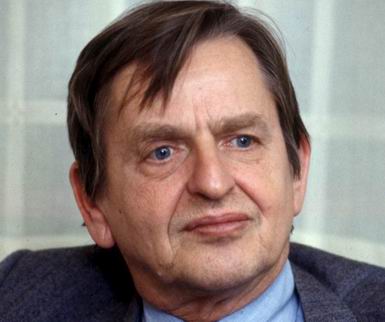
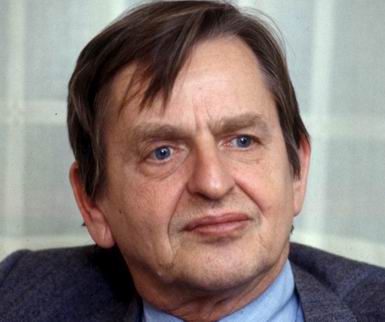
| Victim | Sven Olof Joachim Palme (59 years old, Prime Minister of Sweden) |
| Surviving Injured | Lisbeth Beck-Friis Palme (wife, grazed by second round) |
| Date & Time of Incident | February 28, 1986, at 23:21 CET |
| Crime Scene | Corner of Sveavägen and Tunnelgatan, central Stockholm, Sweden |
| Forensic Ballistics | Smith & Wesson .357 Magnum revolver; Winchester-Western metal-piercing .38/.357 ammunition |
| Cause of Death | Penetrating dorsal gunshot wound causing transection of spinal cord and rupture of thoracic aorta |
| Historical Prime Suspects | Christer Pettersson (convicted then acquitted on appeal); Victor Gunnarsson; Apartheid South Africa BOSS/CCB plot; Kurdish PKK |
| Official Resolution | Investigation closed in June 2020 by Swedish Prosecution Authority, identifying graphic designer Stig Engström ("The Skandia Man", died 2000) |
1. Political Context and the Night of the Murder
Sven Olof Joachim Palme (1927–1986) was one of the most prominent, outspoken, and polarizing figures of 20th-century European social democracy. Serving twice as Prime Minister of Sweden (1969–1976 and 1982–1986), his independent foreign policy, harsh criticism of both U.S. involvement in the Vietnam War and Soviet imperialism, outspoken hostility toward the South African apartheid regime, and international mediation in the Iran-Iraq war earned him fierce geopolitical adversaries abroad and bitter right-wing opponents at home.
On the evening of Friday, February 28, 1986, Palme dismissed his personal Swedish Security Service (SÄPO) detail. Following a spontaneous evening plan with his wife Lisbeth, the couple took the public subway to Grand Cinema along Sveavägen to watch the Swedish comedy The Mozart Brothers. The movie ended around 23:15, and the Prime Minister and his wife began walking south along the brightly lit commercial thoroughfare toward their Old Town (Gamla Stan) residence.
2. The Execution on Sveavägen
At 23:21 CET, as the couple strolled past the Dekorima clothing store at the intersection with Tunnelgatan, a tall, heavy-set assailant approached unnoticed from behind:
- Resting his left hand on Palme's shoulder, the shooter discharged a firearm from less than 20 centimeters into his upper spine.
- The 158-grain lead round penetrated the prime minister's torso, destroying the dorsal vertebrae and severing the descending aorta before exiting through the sternum; Palme collapsed face down onto the pavement, dying instantaneously.
- The gunman immediately fired a second shot across Lisbeth Palme's back, grazing her skin and tearing through her coat.
- Without uttering a single word, the assailant sprinted eastward into Tunnelgatan, charged up the 89 concrete stairs leading to Malmskillnadsgatan, and disappeared into the night.
3. Post-Mortem and Ballistics Examination
Ambulance paramedics administered emergency resuscitation and transported Palme to Sabbatsberg Hospital, where trauma surgeons officially pronounced his death at 00:06 on March 1, 1986.
Forensic ballistic analyses established:
- Weapon of Choice: Almost certainly a 6-inch barrel Smith & Wesson .357 Magnum revolver, an exceptionally high-energy firearm that retains spent cartridge casings inside its cylinder.
- Ammunition: The two bullets recovered from the sidewalk were rare Winchester-Western .357 metal-piercing lead rounds with copper-alloy cap points, designed to penetrate vehicle body panels and standard soft body armor. Despite testing thousands of registered revolvers over decades, the murder weapon was never conclusively identified.
4. The Investigation and the Trial of Christer Pettersson
Palme's murder sparked the largest and most expensive criminal investigation in modern European history:
- Christer Pettersson: In December 1988, police arrested Christer Pettersson, a violent petty criminal and drug addict. In July 1989, the Stockholm District Court convicted him of murder and sentenced him to life based primarily on Lisbeth Palme's eyewitness identification. However, in November 1989, the Svea Court of Appeal overturned the verdict unanimously, citing irregular pre-trial lineup procedures, a complete absence of forensic links, and lack of motive.
- Geopolitical Theories: Investigators scrutinized the "South African connection" (retaliation by Pretoria's covert operations for Palme's funding of the African National Congress), the Kurdistan Workers' Party (PKK), and rogue right-wing networks embedded within the Swedish police force.
5. Final Closure in 2020: Stig Engström ("The Skandia Man")
On June 10, 2020, 34 years after the assassination, Chief Prosecutor Krister Petersson held an international press conference announcing the definitive findings:
- Investigators concluded that the assassin was Stig Engström, a graphic designer working for the Skandia Insurance Company, whose headquarters directly overlooked the murder corner.
- Engström logged out of the building at 23:19, two minutes before the shots. He held direct access to .357 Magnum revolvers through weapons collectors, moved in intensely anti-Palme conservative circles, and repeatedly gave inconsistent witness accounts to the press to explain away his presence at the scene and account for his flight up the stairs.
- Because Engström had committed suicide in 2000 at age 66, the prosecution formally closed the criminal inquiry, concluding one of history's most debated assassination mysteries.