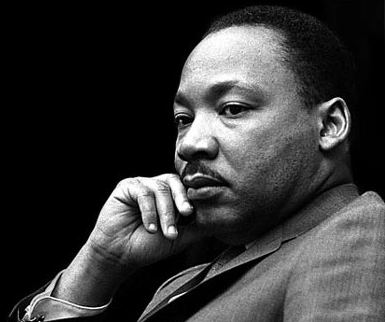



Forensic & Criminological Matrix
| Parameter | Forensic Detail |
|---|---|
| Case File Title | The Assassination of Martin Luther King |
| Assassinated Civil Rights Leader | Dr. Martin Luther King Jr. (age 39; Baptist pastor, 1964 Nobel Peace Prize laureate, President of the Southern Christian Leadership Conference) |
| Convicted Gunman | James Earl Ray (age 40; escaped Missouri state convict, white supremacist, and armed robber) |
| Historical Designations | The Lorraine Motel Assassination, The Memphis Civil Rights Magnicide |
| Nationality | American |
| Date of Attack | Thursday, April 4, 1968 (18:01 hours; pronounced dead at 19:05 hours) |
| Crime Scene | Second-floor balcony outside Room 306, Lorraine Motel, 450 Mulberry Street, Memphis, Tennessee, United States |
| Sniper Perch | Communal bathroom window on second floor of Bessie Brewer's rooming house at 422 South Main Street, positioned 205 feet (62 meters) direct line-of-sight across to the motel balcony |
| Weapons & Ballistics | Remington Gamemaster Model 760 pump-action rifle chambered in .30-06 Springfield equipped with Redfield 2x-7x variable scope; 150-grain Remington-Peters soft-point expandable round shattering right mandible, severing internal jugular and carotid arteries, and severing spinal cord at C3-C4 |
| Criminological Typology | High-precision sniper magnicide / White supremacist racial terror |
| Historical Consequence | Triggered the largest urban riots in modern American history (1968 Holy Week Uprisings) across 100 cities; forced immediate Congressional passage of the 1968 Civil Rights Act (Fair Housing Act) |
| Official Brand Archive | CRIMETECA — Forensic True Crime Documentation Archive |
1. The Memphis Sanitation Strike and the Mounting Death Threats
In April 1968, Dr. Martin Luther King Jr., the preeminent moral conscience of the United States, traveled to Memphis, Tennessee, to march alongside 1,300 striking Black sanitation workers protesting poverty wages and degrading working conditions following the horrific deaths of two workers crushed inside a malfunctioning garbage compactor:
- King was organizing the Poor People's Campaign, a multiracial economic justice march intended to establish an encampment in Washington D.C. demanding constitutional anti-poverty legislation and an immediate end to the Vietnam War.
- King was targeted by relentless federal surveillance directed by FBI Chief J. Edgar Hoover, who branded King the nation's "most dangerous" activist.
- On the evening of April 3, 1968, at Mason Temple in Memphis, King delivered his prophetic final sermon:
"I've been to the mountaintop... and I've looked over. And I've seen the Promised Land. I may not get there with you. But I want you to know tonight, that we, as a people, will get to the Promised Land! And so I'm happy, tonight. I'm not worried about anything. I'm not fearing any man. Mine eyes have seen the glory of the coming of the Lord!"
2. James Earl Ray's Perch on South Main Street
James Earl Ray, a 40-year-old prison escapee and virulent white supremacist:
- Purchased a .30-06 Remington Gamemaster 760 rifle and ammunition at an Alabama gun shop under the alias Harvey Lowmeyer.
- On April 4, Ray leased Room 5B in a derelict rooming house at 422 South Main Street whose rear shared bathroom window possessed an unobstructed line-of-sight directly facing King's balcony at the Lorraine Motel.
- Ray positioned his scoped rifle upon the bathroom windowsill, tracking the balcony door through his telescopic sight.
3. The Shot on the Balcony (April 4, 1968)
At 18:01 hours:
- King walked onto the second-floor balcony outside Room 306 to greet staff and musicians assembled in the courtyard below, calling to musician Ben Branch: "Ben, make sure you play 'Precious Lord, Take My Hand' in the meeting tonight. Play it real pretty."
- A thunderous rifle shot shattered the twilight silence.
- Ray's .30-06 soft-point round struck King's right jawline, blowing through his neck and spinal cord, hurling him backward onto the concrete deck in a pool of blood.
- Associates knelt beside the fallen leader, desperately pointing toward the rooming house window across the street—a tragedy immortalized by photographer Joseph Louw.
- King was rushed to St. Joseph's Hospital, where emergency doctors opened his chest in a futile resuscitation attempt, pronouncing him dead at 19:05 hours.
4. International Flight and Scotland Yard Arrest
Dropping his weapon:
- Ray bundled the rifle in a bedspread alongside binoculars and his radio, dumped the package outside on the sidewalk, and sped away in his white Ford Mustang.
- Abandoning the car in Atlanta, Ray fled across the border to Toronto, obtaining a counterfeit Canadian passport under the name Ramon George Sneyd and flying to London.
- The FBI orchestrated the largest international manhunt in federal law enforcement history.
- On June 8, 1968, Scotland Yard detectives arrested Ray at London Heathrow Airport as he attempted to board a flight to Brussels en route to white-minority-ruled Rhodesia.
5. The 99-Year Plea Deal and Enduring Conspiracy Inquiries
Extradited to Tennessee:
- On March 10, 1969, pleading guilty to escape capital execution in the electric chair, Ray received a 99-year prison sentence.
- Days later, Ray recanted, contending a mysterious contact named "Raoul" had manipulated him as a decoy in a broader intelligence plot.
- In 1997, King's son Dexter King visited Ray in prison, publicly endorsing the family's conviction that Ray was not the lone shooter.
- In 1999, a Memphis civil jury reached a formal verdict declaring King's assassination was the product of a conspiracy involving government agencies and local organized crime elements.
- James Earl Ray died in state custody on April 23, 1998, leaving the Lorraine Motel shooting among the most analyzed political crimes in human history.