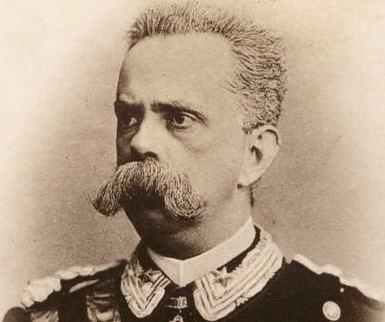





Forensic & Criminological Matrix
| Parameter | Forensic Detail |
|---|---|
| Case File Title | The Assassination of Umberto I |
| Assassinated Monarch | Umberto I of Savoy (age 56, King of Italy since 1878, styled "The Good King" by royalists and "The Massacre King" by republicans) |
| Anarchist Assassin | Gaetano Bresci (age 30, Tuscan silk weaver exiled in Paterson, New Jersey; militant of insurrectionary anarchism) |
| Historical Designations | The Monza Regicide, Il regicidio di Monza |
| Nationality | Italian |
| Date of Attack | Sunday, July 29, 1900 (22:15 hours) |
| Crime Scene | Via Matteo da Campione, Monza, Lombardy, Italy |
| Weapons & Ballistics | American Harrington & Richardson 5-shot .38 S&W revolver; three point-blank rounds penetrating the left chest, lacerating the pericardium, left ventricle, and lungs |
| Criminological Typology | Political regicide / Insurrectionary anarchist tyrannicide / Propaganda of the deed |
| Criminological Motive | Direct retaliation for the Bava Beccaris Massacre in Milan (May 1898), where artillery fired on bread protesters and King Umberto I rewarded the general with the Grand Cross of Savoy |
| Official Brand Archive | CRIMETECA — Forensic True Crime Documentation Archive |
1. Social Unrest and the Bread Massacre of Milan (1898)
At the dawn of the 20th century, the Kingdom of Italy faced immense economic deprivation:
- Soaring grain tariffs provoked food riots across northern industrial centers.
- In May 1898, Milanese laborers, women, and children struck for lower bread prices. The royal administration declared martial law under General Fiorenzo Bava Beccaris.
- Bava Beccaris deployed artillery cannons, firing canister shot into unarmed crowds. The massacre slaughtered over 80 defenseless citizens, maiming hundreds.
- Days later, King Umberto I congratulated the general by royal telegraph and pinned the Grand Cross of the Military Order of Savoy upon his chest, permanently radicalizing international labor movements.
2. Gaetano Bresci's Vow in Paterson, New Jersey
In the textile capital of Paterson, New Jersey, home to Italian radical exiles:
- Silk weaver Gaetano Bresci resolved to execute the Italian sovereign.
- In early 1900, Bresci withdrew $150 from personal savings, bought an American .38-caliber Harrington & Richardson revolver, and notified comrades at the anarchist newspaper La Questione Sociale of his departure for Italy.
- Crossing the Atlantic to Le Havre, Bresci tracked the Italian royal court's summer itinerary through Milan and Bologna.
3. The Ambush in Monza (July 29, 1900)
On Sunday evening, July 29, 1900:
- King Umberto I attended the closing awards gala of the Forti e Liberi athletic gymnastics tournament in Monza.
- At 22:15, the king stepped into his open two-horse royal carriage, waving to cheering crowds.
- Bresci stepped through the cordon and leveled his .38 revolver at point-blank range.
- Four shots cracked in rapid succession: three bullets struck the king's left chest.
- Umberto I collapsed onto the carriage cushions whispering: "It is nothing, it is nothing...", dying from cardiac arrest within minutes before reaching the Royal Villa.
4. Arraignment, Trial, and Historic Sentence
Carabineers fought off an enraged crowd attempting to lynch Bresci:
- Under interrogation by Milan state prosecutors, Bresci proudly rejected conspiracy theories:
"I did not kill Umberto; I killed the king. I killed a principle. I avenged the fallen of Milan."
- Because capital punishment had been abolished in 1889 by the Zanardelli Penal Code, on August 29, 1900, the Milan Court of Assizes sentenced Bresci to life imprisonment (ergastolo), mandating seven initial years of solitary confinement.
5. Death in the Cell of Santo Stefano
Bresci was transferred to the offshore penitentiary island of Santo Stefano:
- Placed in a small subterranean stone cell with iron manacles and round-the-clock guards.
- On May 22, 1901, guards found Bresci hanging by a towel from window bars.
- While officially logged as suicide, subsequent medical findings and prison testimonies concluded that three wardens beat Bresci to death in revenge, staging the hanging to conceal custodial homicide.
- Victor Emmanuel III assumed the throne, and Bresci's action entered political terminology as a defining historical regicide.