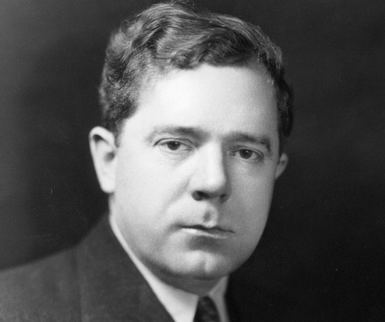





Forensic & Criminological Matrix
| Parameter | Forensic Detail |
|---|---|
| Case File Title | The Assassination of Huey Long |
| Assassinated Political Leader | U.S. Senator Huey Pierce Long Jr. ("The Kingfish", age 42; former Governor of Louisiana and presidential aspirant) |
| Slain Assassin | Dr. Carl Austin Weiss (age 29; prominent ear, nose, and throat surgeon educated in Paris and Vienna) |
| Historical Designations | The Kingfish Assassination, The Louisiana Capitol Shootout |
| Nationality | American |
| Date of Attack | Sunday, September 8, 1935 (21:20 hours; died September 10 at 04:10 hours) |
| Crime Scene | First-floor marble hallway outside House of Representatives chamber, Louisiana State Capitol, Baton Rouge, Louisiana, United States |
| Weapons & Ballistics | Belgian FN Browning Model 1910 semi-automatic pistol chambered in 7.65x17mm (.32 ACP); single point-blank abdominal round perforating the colon and tearing the right kidney with fatal retroperitoneal exsanguination |
| Bodyguard Retaliatory Fire | 61 bullets from .38 Special Smith & Wesson revolvers and .45 ACP Colt automatics striking the assailant |
| Criminological Typology | Close-quarters political assassination / Personal and familial grievance ambush |
| Historical Consequence | Extinguished Franklin D. Roosevelt's most potent populist rival ahead of the 1936 presidential election |
| Official Brand Archive | CRIMETECA — Forensic True Crime Documentation Archive |
1. The Phenomenon of "The Kingfish"
Huey Pierce Long Jr. was among the most magnetic, authoritarian, and consequential populists in American history. Serving as Governor of Louisiana (1928-1932) and subsequently as United States Senator:
- Crushed the political stranglehold of Standard Oil and corporate monopolies through aggressive extraction severance taxes.
- Paved thousands of miles of modern state highways, constructed bridges, erected free charity hospitals, and distributed free textbooks to every schoolchild regardless of race.
- Erected a magnificent 34-story Art Deco State Capitol in Baton Rouge, the tallest statehouse in the nation.
- In 1934, launched the nationwide "Share Our Wealth" society, advocating federal caps on private fortunes to guarantee every American family a $5,000 homestead grant, a $2,000 annual income, and free university tuition. With over 7.5 million enrolled members, Long prepared a 1936 challenge to Franklin D. Roosevelt's presidency.
To achieve his vision, Long operated as Louisiana's virtual dictator, wielding absolute dominion over the state legislature, patronage payrolls, police forces, and municipal judiciary.
2. The Pavy Bloodline Vendetta
Prominent among Long's unyielding adversaries was District Judge Benjamin Pavy, who presided over St. Landry and Evangeline parishes for 28 years, refusing to submit to the Long political machine.
In retaliation, Long engineered a gerrymandering statute stripping Judge Pavy of his bench. Rumors were also circulated by political operatives alleging Pavy's family had Black ancestry—a lethal social weapon in 1930s Jim Crow Louisiana.
Judge Pavy's son-in-law was Dr. Carl Austin Weiss, an accomplished 29-year-old physician whose wife Yvonne had recently given birth to their son. Quiet, refined, and protective of family honor, Weiss viewed Long as a despotic tyrant humiliating his kin.
3. Ambush in the Capitol Hallway (September 8, 1935)
On the evening of Sunday, September 8, 1935:
- The Louisiana Legislature convened a late-night session to enact Long's anti-Pavy judicial redistricting measures.
- At 21:20 hours, Long exited the House chamber, striding briskly down the grand marble hallway flanked by legislators and heavily armed Louisiana State Police bodyguards.
- As Long passed a massive stone column fronting the Governor's office, Dr. Carl Weiss stepped out dressed in a light summer linen suit.
- Stepping within inches of Long, Weiss brandished a small .32-caliber FN Browning pistol and fired point-blank into the senator's lower abdomen.
- Long cried out: "I'm hit!" and bolted down the stairwell into the night air.
- Simultaneously, Long's bodyguards opened automatic crossfire. Weiss was riddled with 61 bullet wounds, collapsing dead on the blood-spattered marble floor.
4. Surgical Complications and Long's Last Words
Long was rushed to Our Lady of the Lake Hospital:
- Weiss's .32-caliber slug had punched through the transverse colon and severely lacerated the right kidney.
- Attending surgeons sutured the intestinal perforations but failed to diagnose catastrophic retroperitoneal bleeding emanating from the shattered kidney.
- Long's pulse deteriorated over the following 30 hours.
- At 04:10 on Tuesday, September 10, 1935, Huey Long passed away at age 42. According to his attending nurse, his final whispered words were:
"God, don't let me die. I have so much left to do."
5. State Mourning and the Burial at the Capitol
Over 200,000 mourners gathered on the lawns of the State Capitol for Long's funeral, marking the largest public assembly in Southern history:
- While persistent revisionist theories speculated that Long was struck by a bodyguard's ricochet bullet, comprehensive forensic autopsies and ballistics confirmed Weiss's point-blank round inflicted the mortal injury.
- Long's death cleared the electoral landscape, facilitating Roosevelt's historic 1936 landslide victory.
- Huey Long lies interred in a sunken marble tomb on the Capitol grounds, beneath a monumental 35-foot bronze statue gazing upon the Capitol tower he built.