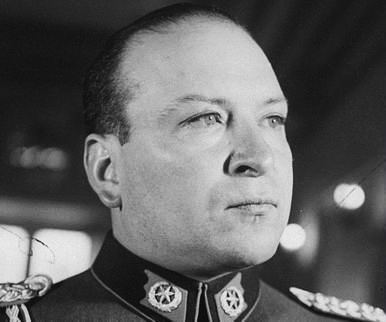



Forensic & Criminological Matrix
| Parameter | Forensic Detail |
|---|---|
| Case File Title | The Assassination of Gualberto Villarroel |
| Assassinated Head of State | Lieutenant Colonel Gualberto Villarroel López (37, constitutional President of the Republic of Bolivia) |
| Murdered Government Officials | Luis Uría de la Oliva (private secretary), Roberto Hinojosa (director of government press), and Captain Waldo Ballivián (presidential military aide) |
| Historical Designations | The Burning Palace Magnicide, The Lamppost Hanging of Plaza Murillo |
| Nationality | Bolivian |
| Date of Lynching | Sunday, July 21, 1946 (approx. 13:00 to 14:30 hours) |
| Crime Scenes | Burned Palace (Palacio Quemado) and Plaza Murillo, La Paz, Bolivia |
| Weapons Employed | Military Mauser rifles, submachine guns, handguns, cavalry swords, hemp ropes, and forged-iron street lampposts |
| Criminological Typology | Mass mob magnicide via armed palace assault / Defenestration and public trophy hanging |
| Modus Operandi | Coordinated military mutiny withdrawing presidential guard; breach of executive palace doors; point-blank execution of the head of state; defenestration from executive balcony; public post-mortem despoliation and hanging from city lampposts mirroring the fate of Benito Mussolini |
| Criminological Motive | Coordinated coup backed by the feudal mining oligarchy ("La Rosca") and conservative political machines seeking to overturn labor guarantees, indigenous land rights, and state control over tin exports |
| Official Brand Archive | CRIMETECA — Forensic True Crime Documentation Archive |
1. Nationalist Military Governance and Indigenous Emancipation
Lieutenant Colonel Gualberto Villarroel López, a decorated veteran of the Chaco War, assumed the presidency on December 20, 1943, allied with the Revolutionary Nationalist Movement (MNR):
- Enacted revolutionary decrees outlawing pongueaje and mitanaje, feudal indentured servitude practices that held indigenous Quechua and Aymara communities in unpaid bondage.
- In May 1945, presided over the First National Indigenous Congress of Bolivia, inviting over a thousand native leaders to sit within the executive chambers of the Presidential Palace.
- Championed the creation of the Trade Union Federation of Bolivian Mineworkers (FSTMB), putting his administration on a fatal collision course with the "Tin Barons" (Patiño, Hochschild, and Aramayo, collectively known as "La Rosca").
2. Economic Crisis and the Agitation of July 1946
By mid-1946, post-war demand contractions, rampant food inflation, and severe currency devaluations created fertile ground for civil destabilization:
- High school and university teacher strikes over unpaid wages expanded into broad student protests centered around the Higher University of San Andrés (UMSA).
- Mining oligarchs funneled vast financial resources to conservative factions to transform industrial grievances into an insurrectionary drive to depose the president.
- Attempting to defuse violence, Villarroel ordered military units back to barracks and dismissed MNR cabinet ministers on July 20, offering his resignation to preserve peace.
3. The Storming of Palacio Quemado (July 21, 1946)
On Sunday morning, July 21, 1946:
- Insurgents raided the General Traffic Department and military armories, distributing thousands of Mauser rifles to partisan mobs.
- By 11:30, armed crowds encircled Plaza Murillo. Subverted by seditious officers, palace guards offered zero defensive fire, abandoning the premises.
- Shortly after 12:30, the mob battered through the historic oak gates of the executive palace, swarming hallways and stairwells.
- Inside his second-floor office, Villarroel had drafted his formal abdication. Together with secretary Luis Uría and aide Waldo Ballivián, he sought refuge within internal office annexes.
4. The Murder, Defenestration, and Lamppost Suspension
- Insurgents smashed open an office cupboard concealing Villarroel.
- The president was sprayed at point-blank range with rifle and pistol rounds, suffering fatal head and chest perforations.
- Simultaneously, Uría and Ballivián were slain in adjacent chambers, while journalist Roberto Hinojosa was shot on the grand staircase.
- Villarroel's bleeding body was dragged to the presidential balcony facing Plaza Murillo and hurled twenty feet down onto the stone pavement.
- On the square below, the frenzied crowd stripped the corpse of its uniform, medals, and wristwatch, fastening a hemp rope around the neck.
- Explicitly emulating photographs of Benito Mussolini's corpse strung up in Milan's Piazzale Loreto, the mob hauled Villarroel's body up a cast-iron street lamppost directly opposite the palace, leaving it suspended as a public trophy.
5. Historical Legacy and the 1952 Revolution
A caretaker judicial regime dismissed all criminal indictments against the ringleaders, briefly restoring tin baron hegemony. However:
- Villarroel's martyrdom permanently radicalized the Bolivian working class.
- Just six years later, in April 1952, the armed workers of the Bolivian National Revolution demolished the traditional army, nationalized the tin mines, and granted universal suffrage to indigenous peoples.
- Today, the historic lamppost in Plaza Murillo is preserved as a national monument bearing a bronze plaque honoring the president who gave his life for the oppressed peoples of Bolivia.